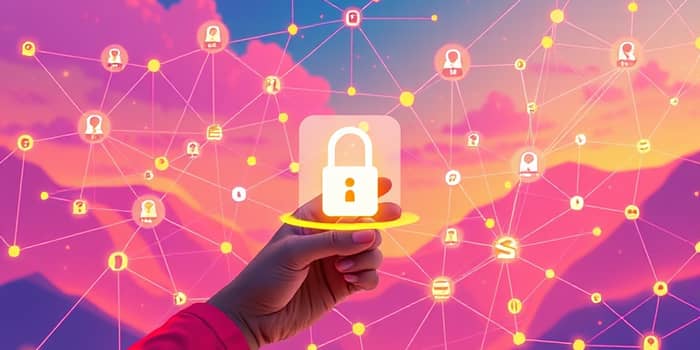
Imagine a world where every individual truly owns their personal data, where identity is no longer a commodity traded by corporations or governments, but a sacred trust held by its rightful owner. In this world, your credentials, histories, and verifications reside securely on a decentralized ledger, immune to tampering or unauthorized access. This is not mere fantasy; it is the promise of self-sovereign identity (SSI) on the blockchain. By harnessing decentralized, immutable, transparent characteristics of blockchain, SSI offers a paradigm shift toward complete ownership and control of personal information.
As technology evolves, we stand at a crossroads. Centralized identity systems have shown their vulnerabilities through repeated data breaches and misuse of personal information. The need for a resilient alternative has never been more urgent. Blockchain-based digital identity provides a resilient framework where privacy, security, and user empowerment are baked into the architecture.
In this article, we will explore the core definitions, transformative benefits, real-world applications, and future trajectory of self-sovereign identity. Our journey will reveal how SSI can reshape sectors from finance to healthcare, reduce costs, and foster greater trust in digital interactions.
Self-Sovereign Identity is a digital identity model that places the individual at the center of their own data universe. Rather than relying on centralized providers, users store credentials—such as passports, driver’s licenses, or academic certificates—on personal devices or encrypted identity hubs. When a service provider requests verification, the user selectively discloses only the necessary attributes, preserving privacy without sacrificing trust.
The foundational elements of SSI include unique decentralized identifiers tied to entities, verifiable credentials, and cryptographic proofs. These components work together to ensure that identities are both portable across platforms and resistant to tampering.
Adopting blockchain-based self-sovereign identity unlocks a range of powerful benefits, from enhanced security to cost reductions and operational efficiency. Below is a summary of core advantages:
Beyond these high-level categories, blockchain-enabled identity also eliminates password-based authentication by using public-private key pairs and biometric integrations. This approach not only mitigates phishing risks but also enhances user convenience.
Several pioneering projects demonstrate the enormous potential of SSI in diverse sectors. Microsoft's ION (Identity Overlay Network) is a public, permissionless network built on the Bitcoin blockchain. ION enables users to create decentralized identifiers that they can control directly, proving their identity without divulging unnecessary personal details.
Another frontier is digital identity wallets. These software solutions allow individuals to store and manage their credentials securely on smartphones or secure hardware modules. The European Commission’s forthcoming self-sovereign identity wallet initiative aims to grant every citizen a portable digital ID recognized across member states, streamlining access to services from healthcare to e-governance.
In financial services, SSI can redefine Know Your Customer (KYC) procedures. Instead of submitting a stack of documents to each bank or exchange, users share a verifiable credential issued by a trusted authority once. This single credential can then be validated instantly by multiple institutions, slashing onboarding times and reducing dropout rates.
Despite its promise, the path to universal adoption of blockchain identity is not without hurdles. One prominent concern is the right to be forgotten versus immutability. Blockchain's unchangeable nature conflicts with regulatory requirements like GDPR, which grant individuals the right to have their data erased. Designers must innovate privacy-preserving mechanisms such as off-chain storage or revocation registries to balance these demands.
Another challenge is user responsibility. In an SSI model, individuals bear the burden of managing their cryptographic keys and recovery methods. Without robust education and intuitive recovery processes, users risk losing access to their identities permanently.
Scalability is also a pressing issue. Public blockchains can become congested, leading to delays and higher fees. Layer 2 solutions and interoperable standards under development aim to address these constraints, making SSI viable at global scale.
Finally, collaboration on industry standards is critical. Organizations like the World Wide Web Consortium (W3C) are crafting universal specifications for decentralized identifiers and verifiable credentials. Cross-industry and cross-regulatory cooperation will be essential to ensure interoperability, security, and user privacy.
As we stand on the brink of a digital identity revolution, the vision of self-sovereign data control inspires hope for a more equitable, secure, and user-centric digital ecosystem. By embracing blockchain-based SSI, we empower individuals to reclaim ownership of their personal information, reduce systemic vulnerabilities, and foster a culture of trust.
The shift toward decentralized identity represents more than technological innovation; it embodies a societal transformation. In a world where digital interactions touch every aspect of daily life, from healthcare appointments to financial transactions, having a trustworthy foundation for identity is paramount.
Ultimately, self-sovereign identity on the blockchain is not merely a technological upgrade—it is a profound statement about human dignity and agency. It declares that personal data belongs to the individual, not to faceless intermediaries. As governments, institutions, and innovators align to build this new paradigm, we move closer to a future where identity is secure, portable, and truly self-sovereign.
Join the movement. The era of decentralized digital identity is upon us, promising a world where security and privacy are not luxuries, but fundamental rights embedded in the fabric of our digital lives.
References