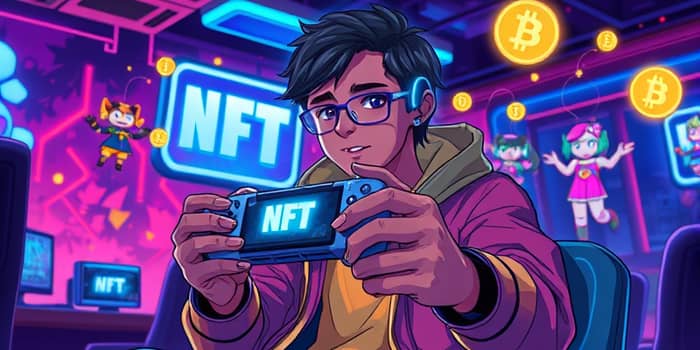
Picture a world where every game you play not only entertains but also empowers you with financial rewards, transforming hobbies into viable income streams.
This is the essence of the Play-to-Earn (P2E) movement, a groundbreaking shift where blockchain technology merges with gaming to create new economic opportunities.
Unlike conventional models, P2E offers true digital ownership through tokens and NFTs, allowing players to earn real-world value from their virtual efforts.
As the gaming industry evolves, this revolution is not just a trend but a fundamental change in how we interact with digital worlds.
The journey of P2E began modestly but has grown into a global phenomenon, reshaping perceptions of gaming as a pastime.
It all started with CryptoKitties in 2017, a simple Ethereum-based game that introduced the concept of breeding and trading NFT collectibles, sparking initial interest in blockchain gaming.
This laid the groundwork for more complex ecosystems like Axie Infinity, which popularized the model by enabling players to earn tokens through gameplay, especially during the 2020-2022 crypto boom.
By 2026, the focus has shifted towards sustainable "Play-and-Earn" models, prioritizing engaging gameplay over mere speculation.
Key milestones in this evolution include:
This progression highlights how P2E has matured from a niche concept to a mainstream force, driven by community and innovation.
At its core, P2E is built on a simple yet powerful premise: players can monetize their in-game activities through blockchain-based assets.
The mechanics revolve around earning cryptocurrency tokens or NFTs for completing tasks, winning battles, or breeding digital characters, which can then be traded on external marketplaces.
To get started, players typically need a crypto wallet like MetaMask and an initial investment to purchase essential assets, such as a team of characters in games like Axie Infinity.
Earning methods are diverse and designed to reward various play styles.
The backbone of this system is tokenomics, where tokens serve multiple purposes like governance, upgrades, and entry fees, ensuring a balanced economy.
Security is paramount, with blockchain providing transparency and audited smart contracts preventing fraud, giving players confidence in their investments.
To illustrate the differences, consider this comparison table that highlights the shift from traditional gaming to P2E.
This framework empowers players to take control of their gaming journey, turning time and skill into tangible assets.
The P2E landscape is dotted with innovative titles that have captured the imagination of millions, offering varied experiences and earning opportunities.
Axie Infinity remains a standout, where players collect, breed, and battle fantasy creatures called Axies, earning Smooth Love Potion (SLP) tokens that can be sold for crypto or fiat currency.
Its scholarship model has been particularly impactful, allowing players in developing regions to access the game without upfront costs, fostering global participation.
Other notable games include The Sandbox and Decentraland, virtual worlds where players can buy land NFTs, create content, and monetize their creations through events or sales.
These platforms integrate decentralized autonomous organizations (DAOs), giving players a voice in governance and fostering collaborative communities.
Emerging titles in 2026 focus on blending entertainment with earning, such as skill-based games that reward strategic play rather than mere grinding.
These examples show how P2E is diversifying, offering something for every type of gamer while pushing the boundaries of interactive entertainment.
Understanding the financial aspects of P2E is crucial for anyone looking to dive in, as it involves both opportunities and risks that require careful consideration.
Initial investments can vary widely, from a few dollars for entry-level assets to hundreds for premium NFTs, with the potential to recoup costs through dedicated gameplay.
For instance, in Axie Infinity's peak, a team of three Axies cost around $600, but active players could earn back this amount over time through SLP rewards.
However, the economics are evolving, with 2026 trends emphasizing utility over speculation, such as tokens used for in-game upgrades or governance voting.
Key factors influencing ROI include:
In developing regions, P2E has provided alternative income sources, though it often requires substantial time investment to achieve decent earnings.
This economic model shifts players from mere consumers to active participants in a decentralized economy, fostering a sense of ownership and community.
While P2E offers exciting prospects, it is not without its pitfalls, and being aware of these can help players make informed decisions.
Financial risks are prominent, including the potential for total loss if token values crash or if games fail to maintain player interest over time.
Early models faced issues like token floods, where excessive rewards devalued currencies, but modern designs incorporate mechanisms to mitigate this.
Other challenges include the time-intensive nature of grinding for profits, which can lead to burnout if not managed properly.
Regulatory uncertainty also poses a risk, as governments worldwide are still grappling with how to classify and tax crypto-based earnings.
By acknowledging these risks, players can adopt strategies like diversifying investments and staying updated on game developments to protect their earnings.
Looking ahead, the P2E space is poised for continued growth, with innovations that promise to make gaming more inclusive and rewarding.
By 2026, the focus is on "Play-and-Earn," where engaging gameplay takes precedence, and earnings are a natural byproduct of fun and skill.
Mainstream adoption is accelerating, with major studios and brands like Disney exploring crypto gaming, bringing legitimacy and new audiences.
Cross-platform integration will allow players to seamlessly access games on web, mobile, and consoles, expanding reach and convenience.
Peer-to-earn models are emerging, enabling players to profit from peer transactions and content creation within decentralized ecosystems.
These trends suggest a bright future where P2E evolves beyond speculation, empowering players to build wealth through creativity and collaboration in a digital age.
Embrace this revolution as a chance to redefine what gaming means, blending passion with purpose in an ever-connected world.
References