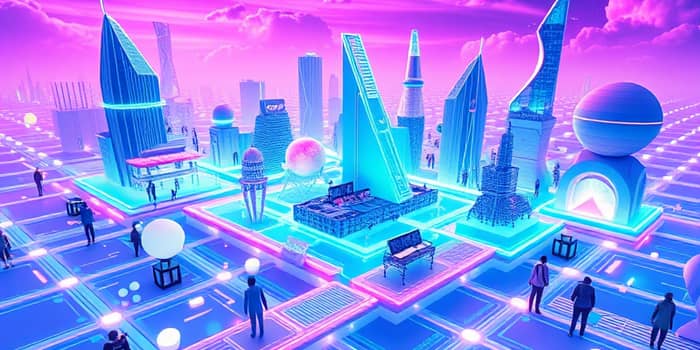
The concept of owning land in the metaverse is reshaping how we perceive real estate. Instead of brick and mortar, investors acquire digital parcels or 3D spaces as NFTs on blockchains like Ethereum.
This groundbreaking shift offers creative freedom, global access, and new revenue streams beyond physical limitations.
Virtual land in platforms like Decentraland and The Sandbox is represented by Non-Fungible Tokens. Each NFT acts as a digital deed, complete with metadata that proves unique ownership.
Transactions rely on smart contracts that automate transfers immutably, ensuring transparency and security. Owners gain the ability to build homes, galleries, or gaming experiences while maintaining public proof of their asset.
Different metaverse worlds cater to varied audiences, each with its own token economy and design philosophy.
Buying land in the metaverse follows a clear, efficient process without paperwork delays.
Factors influencing virtual land prices mirror traditional real estate but with digital twists. Location near high-traffic areas, celebrity-owned plots, and added structures all drive premiums.
Notable examples include the Snoopverse estate selling for $450,000 in ETH and some early adopters seeing values surge over 500% within months.
Investors employ strategies such as buy low in emerging areas and flipping for profit, renting parcels for events, or holding long term as speculative assets.
Ownership rights in virtual worlds depend on platform terms of service rather than traditional property law.
While NFTs offer proof of unique ownership on blockchain, platforms can modify rules or ban users, potentially devaluing assets overnight.
Smart contracts automate sales, leases, and even loan defaults. However, gray areas remain around leasing risks when tenants alter spaces or fail to maintain them.
Beyond speculation, metaverse land unlocks creative possibilities and new business models.
Investors can also diversify across multiple virtual worlds to mitigate volatility and capture growth in emerging metaverses.
Metaverse land ownership represents a fusion of technology, creativity, and finance. It empowers individuals to shape digital landscapes and monetize experiences in ways never possible before.
As with any frontier, risks such as crypto volatility, regulatory uncertainty, and platform control must be managed with due diligence.
By staying informed, engaging thoughtfully, and leveraging limited rights subject to terms, pioneering investors can tap into this dynamic, rapidly evolving realm—and help define the future of virtual real estate.
References