Often hailed as the Google for blockchains, The Graph Protocol transforms raw on-chain data into organized, queryable APIs. By eliminating centralized intermediaries, it empowers developers and users alike to access and utilize blockchain information with unprecedented speed and reliability.
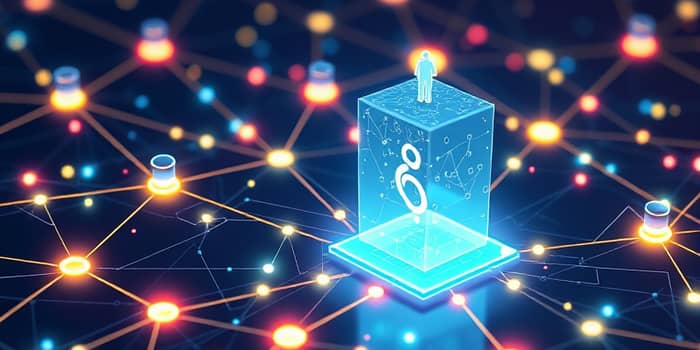
At its core, The Graph is a decentralized, open-source indexing protocol designed to efficiently process blockchain events. Instead of forcing applications to scan entire networks for transactions, The Graph nodes index relevant data into structured formats that can be queried instantly.
These indexes, called subgraphs, operate on a manifest that defines data schemas, mapping scripts, and sources. Developers deploy subgraphs to the network and expose them through standardized GraphQL APIs, streamlining the flow of on-chain information into front-end interfaces.
The Graph’s operation can be broken down into four primary phases, each critical to ensuring fast, reliable access for dApps:
A robust ecosystem underpins The Graph’s capabilities, combining several technical pillars:
Graph Nodes handle block scanning and event extraction, transforming on-chain activity into database updates. Each node writes to an off-chain PostgreSQL store for efficient retrieval.
Subgraphs define the mapping between blockchain events and queryable entities, using AssemblyScript for custom logic. This layer empowers developers to tailor data structures to their application’s needs.
PostgreSQL Databases store the indexed entities, offering powerful query performance and consistency, which remains crucial for real-time analytics and user-facing dashboards.
To maintain a secure, incentive-driven network, The Graph relies on a diverse set of roles, each linked by staking of the GRT token. Participants collaborate to ensure data integrity and availability.
The Graph Token (GRT) secures the network and finances operations. It functions as a unit of value for staking, governance, and fee settlement. By staking to secure network integrity, participants align economic incentives with protocol health.
Query fees, paid in GRT, flow to indexers and curators based on service usage. Delegators amplify network security by entrusting GRT to indexers, sharing in rewards without running infrastructure themselves.
Across Web3, The Graph powers a multitude of applications by enabling real-time on-chain data insights:
Emerging sectors, such as high-frequency trading and cross-chain analytics for Bitcoin and Lightning Network, are exploring custom subgraphs to bridge disparate networks into coherent data landscapes.
By abstracting complex blockchain queries into managed subgraphs, The Graph delivers several key benefits:
While The Graph continues to mature, it must address issues such as scalable indexing in high-throughput environments and subgraph complexity management. Ongoing protocol optimizations aim to reduce indexing lag and enhance query efficiency.
Looking ahead, expansion to new blockchains, integration with AI-driven analytics, and deeper tooling for real-time dashboards promise to extend The Graph’s reach. The vision of a truly open, decentralized data marketplace is closer than ever.
The Graph Protocol stands as a cornerstone of the decentralized web, delivering customizable GraphQL query performance and empowering a new generation of applications. By participating in its ecosystem—whether as an indexer, curator, or developer—you contribute to a future where on-chain data is accessible, reliable, and innovation can flourish without boundaries.
References