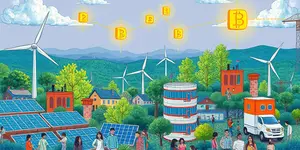
As the internet continues its relentless evolution, Web3 emerges as the beacon of transformation, promising a future where users reclaim control of data, digital assets, and governance. Powered by blockchain, this next phase redefines the online landscape with unprecedented transparency and autonomy.
In the early 1990s, Web1 ushered in static pages and read-only information consumption. Users were mere spectators, passively browsing content hosted on centralized servers. Interaction was minimal, and community engagement virtually non-existent.
The turn of the millennium brought Web2, a dynamic era of user-generated content, social media platforms, and interactive applications. Yet this progress concentrated power in the hands of tech giants, raising concerns about data monetization, privacy breaches, and opaque decision-making processes.
Web3 endeavors to correct these imbalances. By embedding decentralization at its core, it transforms the internet into a user-centric digital asset ownership ecosystem, blending interactivity with communal control.
At the heart of Web3 lies blockchain, a revolutionary data structure that maintains a continuously growing list of records, or blocks, secured through cryptography. Each block contains a timestamp and a link to the previous block, forging an unbreakable chain.
Blockchain operates as a immutable transparent cryptographically secured ledger. Consensus mechanisms—such as proof of work or proof of stake—ensure network participation without centralized authorities, enabling trustless verification of transactions across distributed nodes.
By eliminating intermediaries, blockchain paves the way for direct peer-to-peer interactions, dramatically reducing transaction costs and latency inherent in traditional online systems.
Decentralization disperses data and control across numerous nodes worldwide, erasing single points of failure and minimizing censorship risks. No longer must users entrust their information to centralized platforms vulnerable to hacks or policy changes.
This architecture fosters a decentralized peer-to-peer network where individuals retain sovereignty over their digital presence. Outages, breaches, and corporate policy shifts become less catastrophic when responsibility is shared across a global web of participants.
Smart contracts are self-executing code segments stored on the blockchain. When predetermined conditions are met, these contracts automatically enforce agreements without human intervention or centralized arbiters.
Developers can leverage dynamic automated contractual agreements to build decentralized applications (dApps) that run exactly as programmed, reducing counterparty risk and enhancing operational efficiency across industries.
Blockchain’s transparent ledger records every transaction publicly, yet user identities can remain private through cryptographic techniques. Interactions occur via wallet addresses, decoupling personal data from online activities.
By default, Web3 fosters a privacy-preserving pseudonymous identity management model. Users reveal only what is necessary, while encryption and consensus protocols guard against unauthorized data manipulation or network intrusion.
Tokenization underpins Web3’s economic model. Native tokens can represent governance rights, utility functions, or equity stakes, aligning incentives between developers, stakeholders, and end users.
Participants earn rewards for contributing resources, securing the network, or sharing valuable data. This creates a global permissionless financial system where individuals are compensated fairly, fostering vibrant ecosystems and sustainable growth.
Despite its promise, Web3 faces hurdles. Scalability limitations can lead to slow transaction speeds and high fees during peak usage. Many blockchain networks are refining layer-2 solutions to address these bottlenecks.
Complexity presents another barrier. User interfaces often require technical expertise, hindering mainstream adoption. High initial setup costs for decentralized hosting can deter small projects, even if long-term expenses decrease.
DAOs epitomize Web3’s governance potential. Token holders propose and vote on protocol upgrades, treasury allocations, and policy changes, ensuring community-driven governance and participation. This democratized model fosters accountability and transparency.
Open-source collaboration allows anyone to audit code, suggest improvements, or fork projects, creating an ever-evolving ecosystem shaped by collective insight rather than corporate agendas.
Regulators worldwide are grappling with how to classify tokens, enforce consumer protections, and combat illicit activities. Clear frameworks can accelerate institutional participation and foster trust in decentralized platforms.
Enterprises are piloting blockchain solutions for supply chain tracing, identity verification, and digital asset management. By integrating legacy systems with decentralized protocols, corporations can improve transparency and drive operational efficiency.
Looking ahead, Web3 aspires to create an equitable transparent online environment where individuals control their digital destinies. Financial inclusion, open governance, and digital rights become universal truths rather than distant ideals.
As infrastructure matures and regulatory clarity emerges, Web3 will likely blend seamlessly into daily life, delivering personalized experiences, secure data ownership, and boundless innovation.
The promise of Web3 extends beyond technology—it challenges us to reimagine the social contract of the internet, forging a more empowered, connected world where every participant thrives.
References