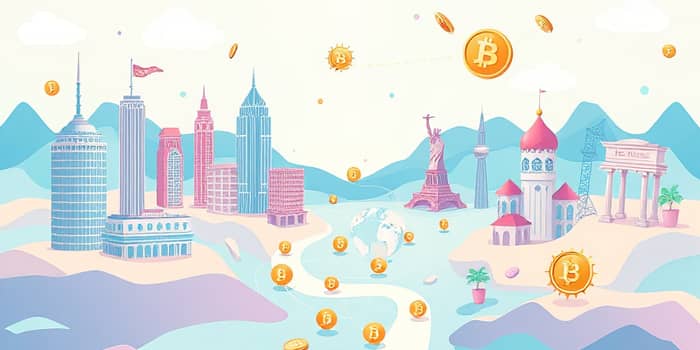
Imagine a world where owning a piece of a luxury skyscraper or a masterpiece painting is as simple as clicking a button. This is the promise of the token economy, a transformative model that is redefining asset ownership for the digital age.
By leveraging blockchain technology, tokens digitize assets and enable peer-to-peer transactions without intermediaries. This shift empowers individuals to participate in markets once reserved for the wealthy.
The core of this revolution lies in tokenomics, which analyzes how tokens are issued and circulated to sustain value. It represents a fundamental change in how we interact with ownership and economics globally.
Tokenization is the process of converting physical or financial assets into digital tokens on a blockchain. These tokens represent ownership rights and are secured by smart contracts.
This allows for precise control and automation of economic interactions. The key steps include documentation, token creation, governance setup, and trading on decentralized platforms.
It is important to distinguish tokenization from mere digitization. While digitization creates digital formats for management, tokenization adds blockchain-based ownership, fractionalization, and enhanced liquidity.
Tokens can be categorized into utility tokens for accessing goods or services and security tokens that resemble equity. This diversity enables a wide range of applications across industries.
Tokenomics delves into the economic design of tokens, focusing on supply, distribution, and incentives. It ensures alignment among participants and long-term project sustainability.
Key elements include total supply, vesting schedules, and mechanisms like inflation or burning. These factors influence token value and market stability.
The DeTEcT theory provides a framework for studying these dynamics. It models agent behaviors and resource allocation in token economies, helping with policy and risk management.
This theoretical approach allows for predicting responses to economic changes. It enhances our ability to design stable and efficient token systems.
Tokenization disrupts traditional models that rely on intermediaries and high barriers. The differences are stark and highlight the advantages of this new approach.
This comparison shows how tokenization offers a more inclusive and efficient alternative. It democratizes wealth generation by making high-value assets accessible to all.
The benefits of token economies are driving a fundamental reshaping of ownership. They offer practical advantages that enhance financial inclusion and market dynamics.
Fractional ownership, in particular, allows investments with minimal capital. This opens doors for retail investors to participate in markets previously out of reach.
Global accessibility ensures that anyone can trade assets without geographical restrictions. This 24/7 market operation enhances flexibility and opportunity.
Token economies are already making an impact across various sectors. These examples illustrate the practical implementation and success of this model.
In real estate, platforms allow investments as low as a few dollars. This democratizes access to property markets and boosts economic activity.
Art tokenization brings masterpieces within reach of everyday investors. It fosters a more inclusive cultural investment landscape.
The token economy is poised to transform finance and investing in profound ways. It signals a shift towards a more decentralized and programmable economic system.
As Web3 technologies evolve, tokenization could overhaul traditional financial structures. This includes reimagining everything from stock markets to asset management.
This transformation encourages innovation in how we perceive value and ownership. It paves the way for a more equitable and efficient global economy.
Despite its potential, the token economy faces challenges that need careful navigation. A balanced view is essential for sustainable growth and adoption.
Regulation remains a critical aspect, as token economies do not eliminate the need for oversight. Jurisdictions vary in their approaches, requiring compliance with emerging frameworks.
Common myths, such as tokenization being limited to cryptocurrencies or NFTs, must be dispelled. It applies broadly to fungible assets and real-world applications.
Risks include pricing volatility and interaction with external markets. Effective policies are needed to ensure stability and protect investors.
Sustainability depends on robust tokenomics design. This involves thoughtful supply schedules and value capture mechanisms.
By addressing these challenges, the token economy can mature. It holds the promise of a more inclusive and dynamic future for asset ownership worldwide.
References