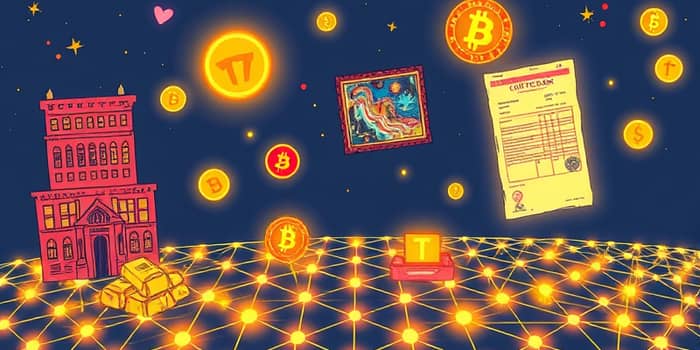
Across global markets, a quiet revolution is stirring behind the code of blockchains and distributed ledgers. From the gleaming towers of corporate real estate to the canvas of a priceless painting, assets once locked in vaults and paper deeds are awakening in digital form. This transformation, known as real-world asset (RWA) tokenization, promises to redraw the boundaries of finance and ownership.
Imagine a world where a portion of an apartment building can be purchased for the price of a cup of coffee, where a share in a rare sculpture sits on your smartphone, and where commodities trade at lightning speed around the clock. This is the emerging reality of tokenized assets, and its implications are profound.
At its core, RWA tokenization is the process of converting rights to physical or digital assets into programmable tokens that live on a blockchain. These tokens can represent ownership, fractional shares, or performance mirrors of assets such as real estate, commodities, art, bonds, equities, private credit, intellectual property, and funds.
Tokens emerge in two primary forms: fungible tokens for divisible assets and non-fungible tokens (NFTs) for unique items. By bridging traditional finance and decentralized platforms, tokenization opens the door to democratizing access to high-value assets, igniting institutional interest and widespread innovation.
As BlackRock CEO Larry Fink remarked, tokenization is poised to become “the next generation for markets,” a testament to its potential impact on capital flows and investment strategies worldwide.
Transforming a tangible asset into a tradable token requires meticulous planning, legal structuring, and technical precision. While the exact process may vary by jurisdiction and asset class, it generally unfolds in six key stages.
First, stakeholders identify an eligible asset—be it a downtown office tower or a vintage wine collection—and conduct a thorough valuation. Next comes the creation of a special purpose vehicle or trust, paired with a legal framework that ensures regulatory compliance. Oracles then translate off-chain data into on-chain metadata, setting the stage for token creation.
Once smart contracts are deployed and tokens minted, KYC/AML checks guide investors onto the platform. From there, tokens trade in secondary markets, while custodians manage off-chain storage and settlement, ensuring that on-chain records mirror real-world ownership.
Tokenization unlocks a host of advantages that redefine how we interact with assets. By converting traditionally illiquid holdings into tradable digital units, it offers unprecedented levels of market liquidity and round-the-clock global trading access.
Fractional ownership models allow small investors to hold slices of commercial real estate or luxury art, while smart contracts automate distributions such as rental income or royalty payments. The result is a more inclusive, efficient, and transparent investment ecosystem.
Despite its promise, РWA tokenization carries inherent challenges. Regulatory frameworks differ across borders, and classification of tokens as securities or commodities triggers oversight by agencies like the SEC or CFTC. Investors and issuers alike must navigate licensing requirements, compliance audits, and evolving legal interpretations.
Technological complexities, including smart contract vulnerabilities and oracle dependencies, underscore the need for robust security protocols. Yet as industry standards mature and audit practices strengthen, many of these hurdles are surmountable.
Looking ahead, the convergence of tokenization with emerging technologies such as decentralized identity tools and programmable finance heralds a new era of asset ownership. Whether unlocking the value of renewable energy credits or fractionalizing patents, the canvas for innovation expands daily, driven by a collective vision of inclusive global financial infrastructure.
The narrative of tokenization goes beyond balance sheets and trading platforms; it is a human story of empowerment. By lowering barriers, automating trust, and streamlining transactions, tokenization can amplify economic opportunity for creators, businesses, and individual investors around the world.
As we stand at this crossroads, the call to action is clear: embrace the possibilities, champion responsible innovation, and collaborate across sectors to build a future where ownership is not confined by geography or wealth, but by imagination and inclusion.
References